“Use your words” is a common phrase parents and teachers say to encourage children to express their thoughts, needs, and/or feelings through language. Language learning begins as soon as infants hear language. Research shows the way parents speak to their children plays an important role in their child’s language development. Providing rich learning environments filled with lots of word use, fosters your child’s ability to process and respond to communication, build a larger vocabulary, and develop academically and socially.
Language Modeling & Literacy (from egg to flight)

It’s never too early to start reading to your child, so start while he or she is still in utero. Reading to your child to get them use to the rhythm of your language.

Babies Learn Language..Face-To-Face
Infants watch the face of the person talking to them. They focus on the eyes and mouth movements to learn how to form words. Parents often use a style of speech known as “motherese”, better known to the world as baby talk. Researchers suggest the use of “motherese” grabs the attention of infants quicker than regular speech and helps babies learn words faster and easier. Babies exposed to lots of language and face-to-face time are more responsive to communication. If you want to give your child a foundation to learn multiple languages, expose them to environments full of natural speakers of the specific languages you are interested in your child learning.
When your child is an infant read to them to lay a foundation of words. Use picture books and connect the words you are saying to actual pictures of the items. Show and describe how to hold and use a book. Show the spine of the book. How to move the pages, which way the words read on the page, and follow their lead when they become interested in something on the page.
Toddlers Learn Language...By Growing Their Word Bank
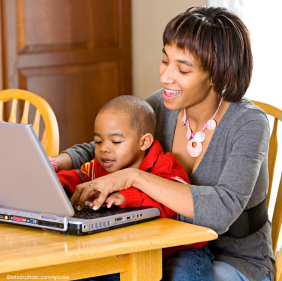
As children grow parents naturally transition their speaking patterns from motherese to regular speech. By age 3 an average child’s word bank holds approximately 3000 words with 90% of those words being understandable. Toddlers have an impressive understanding of words and even though their vocabulary is still fairly limited it is growing rapidly. Talking to your toddler sends messages to your child’s brain that build networks to receive and process information. The more you involve language in your everyday activities the greater chances for the child to develop an extensive vocabulary.As an added bonus the time spent with the child has its own benefit factors.
As they grow into toddlers read everything that you can get your hands on. Incorporate your environment and read cereal boxes, food boxes, tv guides, magazines, pamphlets, books you are interested in, childrens book, signs on the streets. Always use caution and good sense when it comes to computer time. It is important to expose your young child to the world of computer literacy, but remember that all interactions should include an adult and be limited in time. Avoid TV time for very young children and replace it with talking and reading time with older children and adults!
Kindergarten & Elementary Kids Learn Language...Through Exposure to Literacy
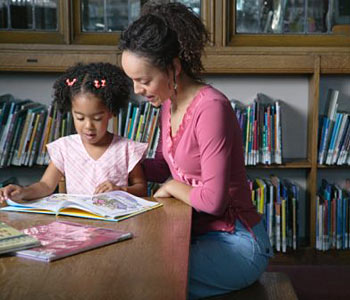
By the time children enter school around the age of five, they typically have a vocabulary of 10,000 words or more. As your child enters school expose them to lots of fun language use. Challenge them to word games, spelling contests, books or written materials that catch their interests. Use books that include pictures to help engage shy readers. Help your children with their school work. Read with or to your child 20 minutes or more daily. One way to help children learn new words is to start a mystery word list. This list can be kept in a notebook or some place accessible in the home where everyone can write words on that they come across. Then you can figure out their meanings and challenge each other to use them in your daily conversations.

Make sure to engage your child by building on strengths and interests of theirs.
For example, if your child is interested in cars, read car books, point out different car parts, colors, sounds, movements, types of cars. Use descriptive words that can help them identify the similarities and differences. Then connect those ideas to other reading materials. Model identifying images in the book. Ask them to point stuff out, make the book interactive. Count images.
Middle & High Schoolers Learn Language...Through Expanded Learning
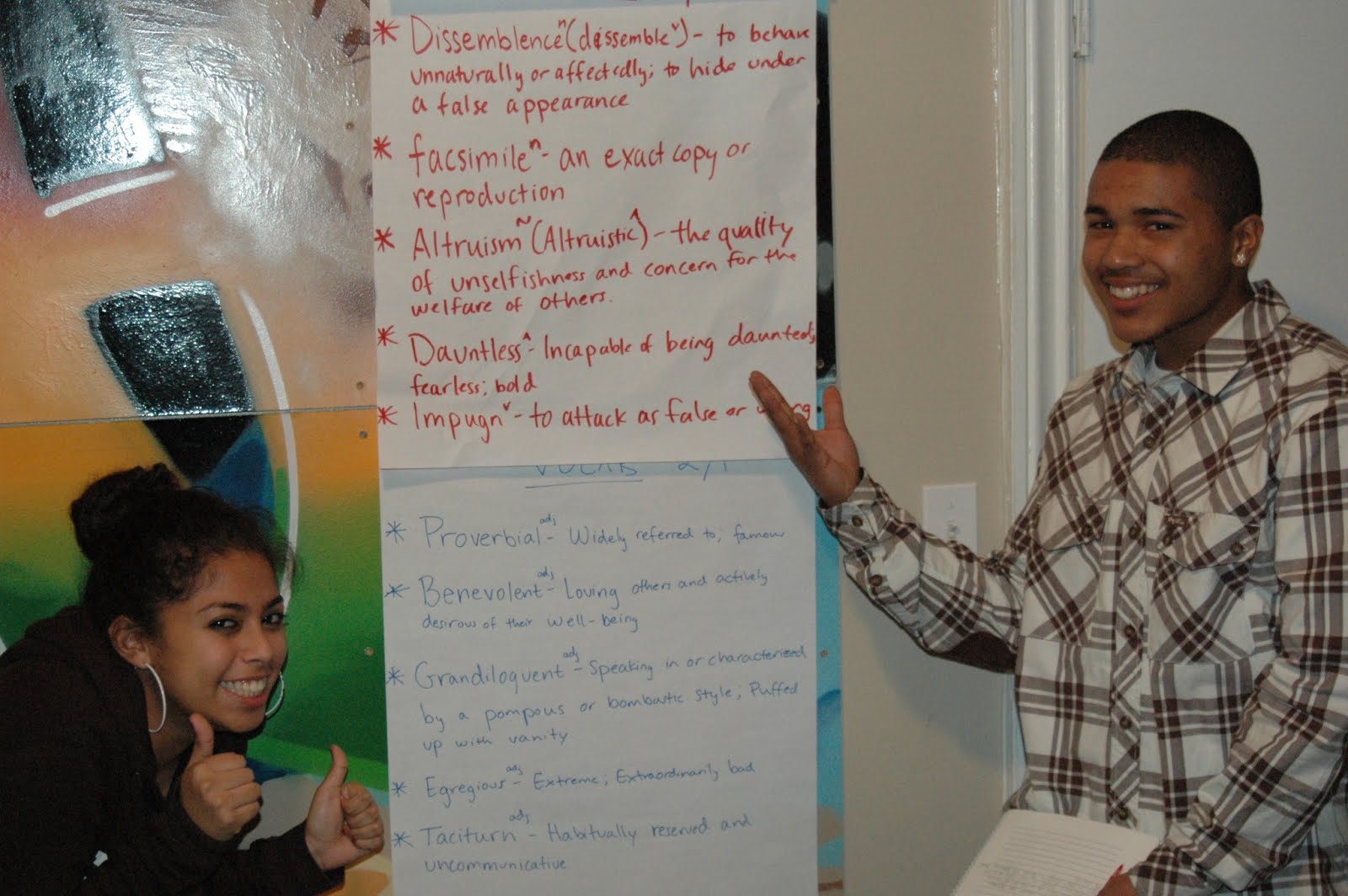
When your child enters the middle to high school range bump up the language acquisition by explaining concepts with a word choice that can motivate the child to investigate language themselves. Start by expanding an area that your child already feels comfortable in. For example, if your child is into animals expand their vocabulary by introducing new animals, describing them, learning about their habits, traits, natural environments, etc. Then expand further by connecting that interest to other subject matters. Connecting animals to science, medical terms, art, theatre, math, etc. will help your child expand language while learning. Whatever your teen is interested in; music, fashion, dance, sports - explore it with them and help them to push the language they use for description. Everything isn’t “awesome!” Help them to find the words that precisely describe what they love about things that interest them. Play language games, use puns, rhymes, and words that sound alike to challenge your young adult’s vocabulary
Language Modeling & Literacy (from egg to flight)
It’s never too early to start reading to your child, so start while he or she is still in utero. Reading to your child to get them use to the rhythm of your language.
Babies Learn Language..Face-To-Face
Infants watch the face of the person talking to them. They focus on the eyes and mouth movements to learn how to form words. Parents often use a style of speech known as “motherese”, better known to the world as baby talk. Researchers suggest the use of “motherese” grabs the attention of infants quicker than regular speech and helps babies learn words faster and easier. Babies exposed to lots of language and face-to-face time are more responsive to communication. If you want to give your child a foundation to learn multiple languages, expose them to environments full of natural speakers of the specific languages you are interested in your child learning.
When your child is an infant read to them to lay a foundation of words. Use picture books and connect the words you are saying to actual pictures of the items. Show and describe how to hold and use a book. Show the spine of the book. How to move the pages, which way the words read on the page, and follow their lead when they become interested in something on the page.
Toddlers Learn Language...By Growing Their Word Bank
As children grow parents naturally transition their speaking patterns from motherese to regular speech. By age 3 an average child’s word bank holds approximately 3000 words with 90% of those words being understandable. Toddlers have an impressive understanding of words and even though their vocabulary is still fairly limited it is growing rapidly. Talking to your toddler sends messages to your child’s brain that build networks to receive and process information. The more you involve language in your everyday activities the greater chances for the child to develop an extensive vocabulary.As an added bonus the time spent with the child has its own benefit factors.
As they grow into toddlers read everything that you can get your hands on. Incorporate your environment and read cereal boxes, food boxes, tv guides, magazines, pamphlets, books you are interested in, childrens book, signs on the streets. Always use caution and good sense when it comes to computer time. It is important to expose your young child to the world of computer literacy, but remember that all interactions should include an adult and be limited in time. Avoid TV time for very young children and replace it with talking and reading time with older children and adults!
- Use Self- and Parallel Talk
- Self-Talk is a strategy in which the adult describes what he or she is doing. The adult provides the words to describe her actions, without expecting the child to respond.
- example of self talk: “I am going to the refrigerator to take out some carrots. Now I am going to wash the carrots. We can share the carrots during our snack time.”
- Parallel Talk is a technique in which the adult describes what the child is doing or seeing. When an adult uses Parallel Talk, he or she is acting like a broadcaster. She watches the action and describes it to the child, without expecting a response. The parent/grandparent/or caregiver does not ask the child questions during parallel talk.
- example of parallel talk: “Looks like you made a really tall tower. First you took the red block and then you added the blue block on top. Your tower is starting to shake the higher you go.Oh, no your tower fell over. That’s ok!”
- Identify moods and feelings to give an understanding of social-emotional development and interaction
Interaction and conversation and exposure to literacy is essential in the early years and will make a difference throughout a child’s life.
Kindergarten & Elementary Kids Learn Language...Through Exposure to Literacy
By the time children enter school around the age of five, they typically have a vocabulary of 10,000 words or more. As your child enters school expose them to lots of fun language use. Challenge them to word games, spelling contests, books or written materials that catch their interests. Use books that include pictures to help engage shy readers. Help your children with their school work. Read with or to your child 20 minutes or more daily. One way to help children learn new words is to start a mystery word list. This list can be kept in a notebook or some place accessible in the home where everyone can write words on that they come across. Then you can figure out their meanings and challenge each other to use them in your daily conversations.
Make sure to engage your child by building on strengths and interests of theirs.
For example, if your child is interested in cars, read car books, point out different car parts, colors, sounds, movements, types of cars. Use descriptive words that can help them identify the similarities and differences. Then connect those ideas to other reading materials. Model identifying images in the book. Ask them to point stuff out, make the book interactive. Count images.
- Ask Open Ended Questions using Why? and How?
- Include intentional why and how questions in your daily conversations with your child. “Why do you think we never see the sun at night?’ or “How should we prepare dinner tonight?”
- Why and How questions requires them to think and not just recall information
- Frequent Conversations - constantly talk to your child, when you’re in the car, cooking dinner, getting them dressed for school etc.
- Repetition and extension
- Model problem solving strategies to help children use their words to navigate tricky conversations
- Advanced Language - string multiple words together in sentences as examples.
- Add in lots of descriptive words
- Connect language to multiple activities to build concepts of what the words mean
- Incorporate written letters and symbols - have your child write shopping lists or letters to mail to friends and family!
Middle & High Schoolers Learn Language...Through Expanded Learning
When your child enters the middle to high school range bump up the language acquisition by explaining concepts with a word choice that can motivate the child to investigate language themselves. Start by expanding an area that your child already feels comfortable in. For example, if your child is into animals expand their vocabulary by introducing new animals, describing them, learning about their habits, traits, natural environments, etc. Then expand further by connecting that interest to other subject matters. Connecting animals to science, medical terms, art, theatre, math, etc. will help your child expand language while learning. Whatever your teen is interested in; music, fashion, dance, sports - explore it with them and help them to push the language they use for description. Everything isn’t “awesome!” Help them to find the words that precisely describe what they love about things that interest them. Play language games, use puns, rhymes, and words that sound alike to challenge your young adult’s vocabulary