A Denver Urban Spectrum column

This content is available in print and on-line at Denver Urban Spectrum as a monthly column.

Friday, January 2, 2015

“Shh” silencing children about race

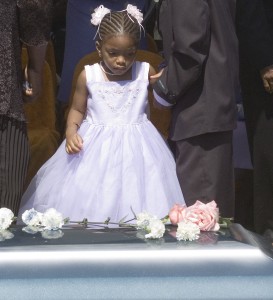
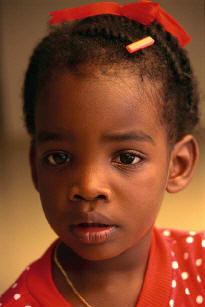
Thought this title might grab your interest. Far too often we silence children about race. The curiosity of a 3 year old provokes an awkward question being made open in public, “Mommy, why is his skin dark like that?” Out of embarrassment the mommy quickly says, “Shh”. Silencing a child and not responding to the question doesn’t take their question away, it merely teaches a child to learn not to talk about race publicly. It is impossible to avoid topics about race, or to convince ourselves that our children are protected from the conversation. As adults we need to recognize that what upsets us also impacts our children.  Even the youngest child will pick up on a change of mood or emotion in the adults that care for them.  Research shows that young children notice race at a very young age and also develop racial biases by ages 3 to 5. What we can’t do is pretend that by NOT talking about it, our kids won’t know that something is going on.

The events surrounding the deaths and court decisions of black men in this country should be conversations in our homes, schools, churches and playgrounds.  We need to guide our children in ways to understand the upset that they are bound to see and feel as protests and demonstrations come closer to home. 

Are we proud of students who walk out of class for an important cause?  Are we upset that students are taking stands about who gets to protest and who must take a back seat? Do we see a place for these conversations in our high schools?  Middle schools?  What about elementary schools?  How young is too young to have this conversation?

No matter what age your child is, the most important place to have this conversation is at home.  They need to know how you see the situation, and they need to voice their thoughts and opinions where they will be heard and safely guided. 

Your child may have opinions that are derived from mis-information, or from a complete mis-understanding of what they have overheard.  It is our responsibility as adults to help fill in gaps, to explain what is not known, to distance the discussion from the specific facts of a specific case and discuss the broader implications of what is happening in their lives.

Some wonderful resources exist for teachers - starting with the twitter hashtag  #fergusonsyllabus.  But what can you do about having this conversation with your young children at home?

First, it is important to note that there are some myths about young children and color that need to be addressed.  One of them is the notion that children don’t care about skin color and need to be taught to discriminate.  The truth is that children are exposed to the biases of our culture no matter how we try to insulate them. 

The famous Clark doll study has had consistent results for almost 40 years.  Young children of different races are asked to choose between a black baby doll and a white baby doll, and consistently choose the white doll.  The white doll is the “good doll” or the “pretty doll” or the “nice doll” even to children who clearly understand that the black doll looks more like them.


Psychology Today (commentary, research and news that cover all aspects of human behavior) offers some important thoughts about how children expose one another to racial bias, and what we as parents should do to ensure that our children know how to handle discriminatory language and situations that they may experience or witness.


We know that children see differences and ask questions.  It is the responsibility of families to discuss race and issues about race with their children.  It is even more important now when high school students are making choices about what part they should play in protests and demonstrations, and what positions they want to take in school discussions, that we start these conversations at home.

0 - 3 year olds -
     Does your child have dolls that represent his or her own race? What other kinds of dolls does your child have access to?  Watch how your child plays and join in.  Roll play with the dolls and help your child see what you want them to see when they look in the mirror. 
     Gift a racially diverse set of dolls to your child’s day care home or center.
     Look for books with heroes and characters of different races.
     Broaden your social circle and help your child be comfortable with many people.

3- 5 year olds -
     Make sure your child feels safe with individuals of different races.  Take a trip to the police or fire department and introduce your child to community helpers.
     Gift books to your child’s school or day care center that have diverse heroes.  Talk about the races of the characters and who the good guys look like.
     Wonder with your child about the race of princesses, about the way the bad guys have accents or the good guys dress in white.  Make the conversation OK in your home.
     Let your child talk about race and difference, and change the subject when you see that it is time.

5 - 10 year olds -
     Provide opportunities for children to bring up their feelings about news they’ve heard of.  Talk about when the police come to their school and how it feels. 
     Talk about protests you’ve heard about or demonstrations led by high school students or that you have participated in.  Talk about how it makes you feel.
     Listen.  They know more than you think they know and need to express their fears, concerns, opinions and misunderstandings.
     Offer your perspective & help to guide their developing views.
     Be protective and watch for signs that your child needs to change the subject.  This is difficult material and they may only be able to handle a bit at a time.

10 - 15 year olds -
     Ask your child if they are interested in joining you in watching a report or reading an article about a protest.  Watch, read, and discuss what is happening together. 
     Listen.  They have strong opinions that aren’t always grounded in truth and they need your guidance to understand what they are trying to process.
     Admit that you don’t have the answers, that you are confused, that you have strong opinions too.  Make it normal to wonder and change your mind as events unfold.
     You know your child best, stay alert to changes that may indicate that they have reached a threshold and aren’t able to process more information.

15 - 20 year olds-
     Discuss the demonstrations they are interested in or hearing about.  They have opportunities to be a part of many different activities, marches, die-ins, pickets and online forums.  Know what your child is participating in.
     Talk about your views - the range of perspectives and views on what are the “right” activities to engage in are wide.  Help your child understand where you stand and why so that they can make choices.
     Stay alert to changes in mood or behavior that may indicate that the situation has become more than your student can handle.  These are important developmental years and your child may become overwhelmed by the struggle.

Being silent about race does not keep children from noticing race; it just keeps them from talking about it. So next time your 3 year old blurts out the question “why is his skin dark like that?” avoid the “shh” response and respond appropriately, “Honey, the world would be boring if we all had the same color of skin. Just like we are born with different color hair and eyes, people have different skin colors.” Remember you can make each moment a teachable moment.

Tuesday, July 29, 2014

Denver Affiliate of the National Black Child Development Institute


Picture Left to Right: Cassandra Johnson (Co-Founder TNM), Wendy Allen BECLP Alumni Network, Shantá Johnson (5th Year BECLP Fellow), Sena Harjo (Co-Founder TNM) and Dorothy Shapland (Co-Founder TNM)

The Nest Matters TNM has been aggressively working on an action research project within the Buell Early Childhood Leadership Alumni Network and would like to get you involved! If you are interested in the development of a Denver Interest Group to acquire an affiliate chapter under the National Black Child Development Institute (NBCDI) we want to hear from you!

What is the NBCDI?          
Glad you asked. “For more than 40 years, the National Black Child Development Institute (NBCDI) has been at the forefront of engaging leaders, policymakers, professionals, and parents around critical and timely issues that directly impact Black children and their families. We are a trusted partner in delivering culturally relevant resources that respond to the unique strengths and needs of Black children around issues including early childhood education, health, child welfare, literacy, and family engagement. With the support of our Affiliate network in communities across the country, we are committed to our mission “to improve and advance the quality of life for Black children and their families through education and advocacy.” (NBCDI Mission Statement)

About our Research
We started our action research project this past January with the following questions in mind for the city of Denver and surrounding neighborhoods within a 50 mile radius outside the city:

  • -        Is there potential for impact for African American children if an affiliate chapter of NBCDI exists in Denver?
  • -        Is there opportunity for more collaboration between agencies, locally and nationally?
  • -        Is there or can we establish a “go to” organization for families of color?
  • -        Can we establish better communication of educational and health related opportunities within a variety of communities?
  •      We want to learn how we can connect with other agencies and organizations to tap into what already exists and find ways to fill the “gaps” in services.

Why Denver? Why Now?
Our children need us NOW more than ever! We must look into all avenues for support systems that will address and meet their growing needs. An affiliate chapter under NBCDI’s pre-established organization just seems like the route to go.

What’s Next?
We are hosting a Meet & Greet Power Session September 11th from 6pm-7:30pm with members from NBCDI’s National Office and individuals in Denver to start a conversation. We invite parents, caregivers, educators, legislators and community members to join us at the table. Send your contact information via email to thenestmatters@gmail.com  if you have an interest in attending the Sept. 11th Power Session.

Tuesday, June 3, 2014

Good Grief for Kids


“My son was 6 years old when my father unexpectedly passed. Popo was the only man in his life at the time. The day my baby boy was born, Popo was there to thump his forehead as if it were a melon while saying something to the effect of “oh, we’ve got a smart one here.” Popo packed my little one around everywhere he went showing him the ways of the world, talking to him and using his wisdom to teach him the secrets of growing up and becoming a man. Blinded by my loss, I never thought about how my son was dealing. To my surprise I learned my son was grieving several months after the funeral, when I received a phone call from his 1st grade teacher. My son had written a short story about losing his Popo. There was so much detail in his story and the picture he drew, that it was like reliving the loss all over. The teacher was just as surprised and had his story published. I never realized or imagined how much grief he was dealing.”

The term “Good Grief” is an idiom for the keen mental suffering or distress over affliction or loss. Dealing with loss is a challenge for an adult, but what is it for our children? We often think that our young ones are too far removed from the reality of death and incarceration to feel grief and loss the way that we do.  The truth is that they know and experience more than we realize.
children-and-grief.jpg

If you have experienced a recent family loss, there are certain responses you can expect, and there are positive ways to respond and support your child. We all experience differing amounts of fear, and sadness, and anger, and guilt, in waves.  Children are no different.  Even the youngest child will experience these feelings while they are grieving.  But they may not be able to understand, clearly express, or even identify these feelings that drive their actions.Empathy is a skill that children learn. To empathize with someone begins with understanding what he is feeling or what you would feel like if you were in the situation. It is not until age 4 that a child begins to associate their own emotions with the feelings of others and age 8 that a child can grapple more complex moral decisions.

image026.jpg

Children fear what will happen to them, or to others they love.  They are sad for their own loss, and are often not able to empathize with your loss. They may be angry at the person who has left, or at those they believe are responsible.  They may be angry at surviving family members, or even with themselves for something they believe caused the loss.  Children are capable of carrying tremendous feelings of guilt and will believe themselves responsible for causing illness, death or loss, but they don’t understand these feelings and just act out on them.

Our communities are full of random loss - accidental death, prolonged illness, suicide, drug overdose, violence, incarceration, terrorism, deployment to a war zone, and even divorce or separation - can produce a grief response in children, and it is up to the adults to provide the safe, nurturing support our children need to navigate these experiences.
What can adults do?

  • Listen.  Let children talk about their grief experiences. Everyone grieves differently, let your child share their grief and feel heard.
  • Understand that there is no set time-frame for grief.  It is not a single event, but a process that will take time.
  • Avoid lies and half-truths.  Children are perceptive, and are more likely to feel that the loss is their fault if they pick up that you aren’t telling them the whole story.
  • Be patient and understand that it is very complicated to process grief at any age.
  • Take care of your own needs as well.  Your grief needs to be expressed and addressed so that you can provide support to a grieving child.

Every individual is different, but there are some general ways that children understand and cope with loss at different stages of development.
MP900422577_0.JPG

0 - 3 Infants and Toddlers - in these early years, babies will know that adults are sad, but they have no real understanding of death. They are likely to experience trust issues if their needs are not met while a family grieves. Take care to nurture and attend to infants and toddlers so that they feel safe even through your own loss.Some reactions to a change in the immediate care of an infant or toddler that indicate grief include; crying, searching as if for a lost object, changes in sleep or eating habits, regression in toilet learning.Teach empathy. The best training for empathy begins in infancy. Infants and toddlers learn the most by how their parents treat them when they are frightened, upset or cranky.

Things you can do to help;
  • physical cuddling and comfort
  • maintain routines
  • meet immediate needs
  • be patient and gentle

3 - 5  Preschoolers tend not to see death as a permanent thing.  Because they have a kind of magical thinking, they tend to see death as a separation and possibly as reversible or temporary. They are likely to believe that certain actions can cause death, and others can undo it.  They may experience the grief of others as frightening, and may feel helpless or guilty for not fixing it.

Some responses will include; tantrums, fighting, regression to bedwetting or thumbsucking, becoming clingy, fear of separation, talking as if the loved one is still around, fear of things they associate with the loss. Talk with your child through their emotions and feelings even if they’re 3-year olds and may be too young to comprehend what you are saying.
sadgirlinred.jpg

Things to do to help;
  • provide safe ways to express feelings (art, story telling)
  • physical contact
  • be patient with regression
  • give clear, simple, truthful answers
  • maintain structure and routines
  • include child in family rituals and mourning
  • listen and comfort
  • allow child to cry
  • encourage child to play and have fun

5 - 9  Elementary aged children can understand the finality of death.  They tend to see violence and death as things that happen to others, and not something that can happen to themselves.  They are very concrete in their thinking and will describe loss in very physical terms. They are also likely to believe in their own power and feel great guilt about having caused the loss by some thought or action.  

Some likely reactions may be: self-blame, irritability, mood swings, anger, denial, withdrawal, trouble concentrating in school, general fear for the safety of loved ones.

Things that will help;
  • provide safe ways to express feelings (music, journaling, dance, art)
  • physical contact
  • be patient with regression
  • be truthful about your own feelings
  • allow time for questions
  • give clear, honest answers
  • schedule time to be together
  • work with schools for supports
  • encourage friendships with others who have experienced loss
  • allow child to choose how to be involved with family rituals and mourning.

9 - 12  Middle school aged children are able to understand the physical realities of death - that the body is no longer functioning and can not be returned to daily life.  They are better able to empathize with others’ loss and to want to help.  They know that death will come to everyone, even themselves, and they are more likely to hide their grief for the sake of moving on.

Some of the responses likely from children in this developmental group include; decline in academic performance, repressing emotions, resentment and blame, withdrawal, isolation, crying, sleep problems, anxiety.

Things that may help;
  • expect and accept mood changes
  • find peer support groups
  • provide time to talk and console one another
  • accept comforting
  • talk honestly and openly and ask for the same
  • model how you cope with your loss
  • provide safe outlets - sports, art, journaling, etc
sadeyes.jpg

12 - 16 Tweens and adolescents are able to comprehend a loss in a more adult manner, however their reactions are more likely to be related to their stage of development.  At this age the steps toward becoming independent are the driving force in their lives, being aware that imagined futures are now altered is likely to cause anger, resentment, and frustration that the teen may deem inappropriate to express with others who are experiencing their own loss.  

Some reactions may include exaggerated; turning to friends for consolation, seeking escapes in substance or self-harm, suicidal thoughts or actions, appetite changes, numbness, physical complaints, risk-taking or thrill-seeking, rebellion, guilt, anxiety, apathy, withdrawal, declining school performance.

Things to try;
  • model appropriate coping with profound feelings
  • talk honestly & invite conversation
  • provide access to adult mentors/counselors
  • provide access to peer support groups
  • monitor risky behaviors & discuss connections to grief
  • encourage and model outlets for grief - writing, drawing etc.
  • expect and accept mood swings and hidden feelings

It can be challenging to try and help a young child while we are grieving ourselves.  When we are coping with your own feelings of loss, it may be helpful to get outside support for your youngest family members. Look for local support groups to help you both!

Monday, April 28, 2014

It's SPRING! Time to Get Outdoors!


True Coloradans have all witnessed a wide range of weather conditions within the changes of seasons.  Springtime, however, is officially here and it is time to get those kiddos playing outdoors. According to research studies today’s kids are indoors far more than their parents ever were and you probably didn’t need a report to tell you that. Most kids spend breakfast in front of the TV as well as a large portion of their downtime. Even preschoolers have record breaking times in front of the TV; with a whopping 32 hours a week and kindergartners have watched more hours of television than the hours it takes to earn a college degree.

There are educational and health benefits linked to children playing outside. Playing outside supports healthy brain development, cognitive skills (thinking), motor skills (running), and social development (decreasing anxiety).The health benefits are immeasurable, extending from a good source of Vitamin D from the sun to reducing ADHD symptoms.

So now that the weather is better let’s get up, let’s get out and let’s get moving.

Let’s go on a Bug Hunt
Materials: Clipboard, marker, and paper (add a magnifying glass and jar if you want to collect what you find)
1. Make a checklist of the type of bugs you want to find. Depending on your child’s development level he or she can simply draw a picture of the bug. If the child is too young to write, a grown-up can write the names of the bugs for print recognition. Older children can draw and write it themselves.
2. Start searching and make little check marks for the bugs you find. Together you both can count the discoveries you found. You can extend your child’s learning by incorporating books about bugs; try An Ant’s Day Off by Bonny Becker, The Very Quiet Cricket by Eric Carle or The Gentleman BugDescription: https://lh3.googleusercontent.com/3By60Ggdr5BEa66BD1YyStqnm5kLzDy7X_z0ycCXvC_Wv7ZT1vsQRsfEMCaprEFmtkBKa0cchRI1Y1-c-A1KfKU-IzK7A_wIChijrRJIZo65xtZT47v74XD4yAQqGw by Julian Hector.

As caregivers and parents we can give children structured and unstructured playtime for outdoor fun. You might ask which one is better for your child. It’s like selecting fruits or vegetables; your child needs both.

Structured play has a set of rules and directions. It is also more organized. Going on a “Bug Hunt” is an example of structured activity for outdoor play because it requires using materials, making a list, drawing, counting and a little bit of science. There are benefits to structured play which include introducing a child to new ideas and teach how to follow directions. There can be some disadvantages when it takes over opportunities for unstructured play. Over scheduling structured play in a child’s life can lead to anxiety, stress and in some cases depression according to the American Academy of Pediatrics. Therefore it is important to allow a child equal opportunity for unstructured play.

Unstructured play, also known as “free” play, is open ended with unlimited possibilities. An example of free play is a trip to the front yard or Neighborhood Park allowing a kid to run free. Children are able to be creative, use their imagination, select what and how they want to play, and explore. The benefits of free play are numerous from building self-resilience, conflict resolution, problem solving techniques, persistence, and social emotional growth. With free play children feel more in control and their levels of motivation are higher because they have chosen something that appeals to them. There are minimal disadvantages associated with free play, with the main one relating to a child’s safety. Adults will always need to observe and be around to ensure the child remains safe.

More Outdoor Activities...
0-3 year olds - SENSORY WALK - take children outdoors and search for different smells, textures, shapes.  Exploring one tree up close, feeling the bark, tracing the shapes of the leaves, listening to the leaves rustle, or to the sound of twigs rubbed together, smelling the leaves or the bark, even just looking closely at the way the tree grows up from the ground can give a young child hours of engagement and meaningful learning that will build school readiness.

3-6 year olds - TRACKING - have young children look for signs of animals.  Tiny bugs and worms are fascinating to young children, and so are tracks in mud or moist soil, but what about animal signs up high?  Look up in the trees and find nests, or chewed leaves.  Look closely at the underside of leaves and find eggs, or even cocoons.  Bird calls, squirrel chirps, or prairie dog calls are signs of animals in our neighborhoods too!  Can your children find traces of 3 or 4 different animals?  Can they tell what the animals were doing?  The questions they ask that might spark further study!

6-12 year olds - BIRDING - Have kids count how many different kinds of birds they see while on a walk outdoors. Or choose a particular bird and try to count how many they find in one small area during a 5 minute observation. There are great resources online for identifying neighborhood birds, and there are ongoing studies where students can report their findings if they decide to do a bird count.

13-21 year olds - SKETCHING - Send teens outdoors with a sketchbook and some fresh colored pencils!  Drawing and capturing plant life outdoors is a great way to develop observational skills, as well as to study the way nature constructs itself and to look for patterns around us.  

21+ year olds - INVESTIGATING - Take a new and more investigative approach to your environment.  Ask critical questions to connect purpose and responsibility to the setting.  For example, when visiting a park or outdoor venue, ask question like “Why is the space laid out like this?”, “Who is participating in the environment?”, “Are there aspects that naturally draw you into them?”, “Is there a way that I can connect to the surroundings?” and even, “What are the take away memories from this space?”  Asking questions like these can help anyone think outside the box about places they might frequent regularly or take advantage of.

Over all, outdoor play is amazing for everyone.  It provides opportunities to engage in learning and stimulation that can take on a life of its own.  Whether its free play, or a structured adventure… be sure to go outside today!


The Nest Matters is LOOKING for parents, grandparents, caregivers, teachers, early childhood specialist individuals and groups that would be interested in joining our Interest Group to acquire Denver Affiliate Status of the National Black Child Development Institute. Please forward your interest to our email address: thenestmatters@gmail.com.